Is your baby fussy because of teething or a possible infection? As a parent, it’s natural to be concerned when your little one seems uncomfortable, especially when it’s difficult to pinpoint the cause. Teething and infections both come with symptoms that can make your baby uncomfortable, but it’s essential to know the difference to ensure your baby’s health is properly managed. While teething is a normal phase of growth, infections often require medical attention.
This blog will help you understand how to tell whether your baby’s discomfort is caused by teething or an infection, so you can take the right steps to care for them.
What is Teething?
Teething is a natural part of your baby’s development. It’s the process of their primary teeth emerging through the gums. For most infants, teething begins around 6 months of age, though some may start earlier or later. The first set of teeth typically includes the lower front teeth (incisors), followed by the upper ones.
Common Symptoms of Teething:
- Drooling: As your baby’s gums become irritated, drooling often increases.
- Mild Irritability: Some babies become fussy as their gums swell and teeth start to break through.
- Swollen Gums: The gums may appear red or swollen where the teeth are trying to emerge.
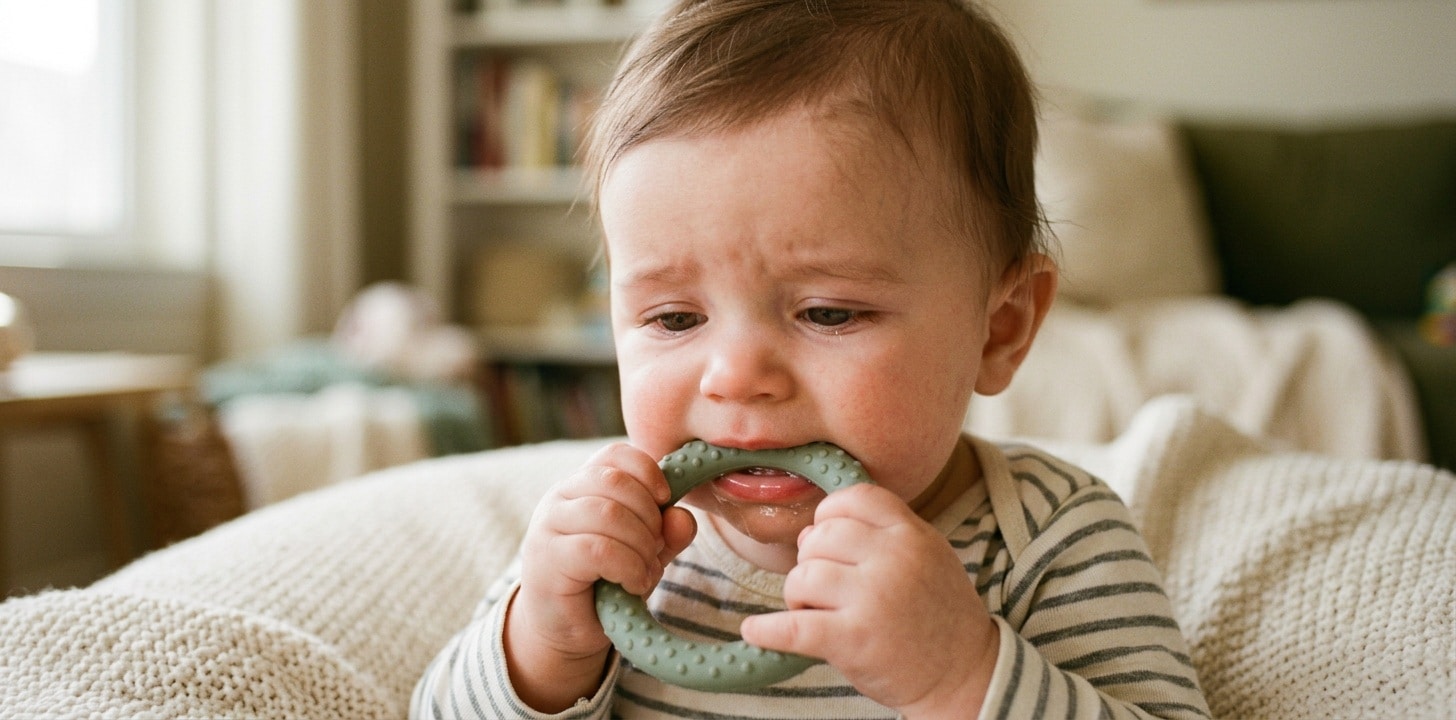
- Chewing on Objects: Babies often chew on anything they can get their hands on to relieve gum pressure.
- Slight Fever: A mild temperature (under 100.4°F) can sometimes accompany teething.
How Long Does Teething Last?
Teething discomfort typically lasts for a few days to a week for each tooth as it breaks through the gums. As your baby progresses through different stages of teething, symptoms will fluctuate but usually subside once the tooth fully erupts. It’s important to note that while teething can be uncomfortable, it usually doesn’t cause prolonged illness.
What is an Infection?
An infection, on the other hand, can occur for many reasons and may involve a bacterial or viral pathogen. Common infections in infants include ear infections, colds, and stomach bugs. These infections may cause more severe symptoms and last longer than teething discomfort.
Common Symptoms of Infections:
- Fever: A temperature over 100.4°F is often a sign of infection and needs attention.
- Ear Pulling: If your baby pulls at their ears or seems unusually fussy when lying down, it could indicate an ear infection.
- Coughing or Runny Nose: Respiratory infections, like the common cold or flu, can lead to a stuffy nose and coughing.
- Abnormal Crying: Babies with infections may cry more intensely or differently than when they’re teething.
- Loss of Appetite: Babies may refuse to eat or drink when they’re sick due to discomfort or a sore throat.
Causes of Infections:
Infections occur when bacteria or viruses enter the body and affect the immune system. For infants, infections can arise from exposure to other sick children, changes in weather, or even teething itself, which can weaken the immune system temporarily.

Key Differences Between Teething and Infection
When your baby is uncomfortable, distinguishing between teething and an infection can be tricky. However, recognizing the differences in symptoms, duration, and fever response can help you determine the best course of action for your little one. Here’s how to differentiate between these two common causes of discomfort.
Symptoms Comparison:
Teething and infections share a few overlapping symptoms, but they also have some key differences. While both conditions may cause irritability and mild discomfort, the intensity and duration of the symptoms can vary.
- Teething is typically associated with mild symptoms like increased drooling, slight irritability, gum swelling, and a need to chew on objects. Babies may also experience a slight fever, usually under 100.4°F. Teething does not usually cause significant changes in appetite or behavior beyond being a bit fussy during the eruption of teeth.
- Infections, on the other hand, often present with more intense symptoms. A baby with an infection may experience high fever (above 100.4°F), ear pulling (common with ear infections), congestion, a runny nose, or cough (with respiratory infections). Infections often cause a noticeable decline in appetite, difficulty swallowing, or discomfort when lying down. Unusual crying and irritability can also indicate the presence of an infection.
Duration:
One of the most significant differences between teething and infections is the duration of discomfort. Teething is usually a short-term process, with discomfort occurring in bursts as each tooth begins to emerge through the gums. The discomfort typically lasts from a few days to a week per tooth, and the symptoms usually subside once the tooth fully erupts.
In contrast, infections tend to last longer, especially if not treated promptly. A cold or flu can last for several days to a week, and an ear infection might require a longer period for recovery. If symptoms persist or worsen after a few days, it may indicate that the issue is not teething, but rather an infection that requires medical attention.
Fever and Other Red Flags:
Fever is a crucial indicator in distinguishing teething from infection. While a mild fever (below 100.4°F) may occur during teething, a high fever is generally associated with infections. If your baby has a fever above 101°F, it’s more likely that they have an infection and may need medical care. In addition, if the fever lasts for more than 24 hours, it’s a sign that you should consult a pediatrician.
Teething discomfort is also less likely to cause additional symptoms like vomiting, diarrhea, or breathing difficulties. These symptoms are more indicative of an infection, and if your baby experiences any of these, you should contact your pediatrician immediately. Infections, especially those affecting the respiratory system, can lead to more serious complications if left untreated, so early intervention is crucial.
In summary, teething usually comes with mild discomfort, short duration, and minor fever, while infections tend to cause more intense symptoms, longer duration, and a higher fever. By paying attention to these differences, you can better assess your baby’s health and take the necessary steps to ensure their comfort and well-being. If you’re ever in doubt, it’s always best to consult a medical professional for a proper diagnosis.

When to Seek Medical Help
While teething discomfort is normal, there are instances when your baby may need professional medical help. Here are some signs that should not be ignored:
- Fever: If your baby’s temperature exceeds 101°F or lasts more than a day, it could indicate an infection.
- Behavioral Changes: If your baby’s behavior drastically changes, such as increased crying, lethargy, or refusal to feed. It could point to an infection.
- Other Red Flags: If your baby is experiencing persistent vomiting, diarrhea, difficulty breathing, or a pimple-like bump near the gums, it’s important to get a medical evaluation as soon as possible.
If you’re concerned about your baby’s symptoms, a pediatrician or an emergency pediatric dentist in Sacramento can evaluate whether the issue is related to teething or an infection. Don’t hesitate to reach out for expert care.
What You Can Do to Help Your Baby
Home Remedies for Teething:
- Cold Teething Rings: A chilled teething ring can help numb the gums and provide relief.
- Gum Massage: Gently rubbing your baby’s gums with a clean finger can soothe irritation.
- Cold Foods: If your baby has started eating solids, offer cold foods like pureed fruit or chilled cucumber to relieve discomfort.
Caring for an Infected Baby:
- Manage Fevers: Use infant acetaminophen (as advised by your pediatrician) to bring down fever and ensure your baby is comfortable.
- Hydration: Offer plenty of fluids to keep your baby hydrated, especially if they have a fever or loss of appetite.
- Follow Pediatric Care Recommendations: If an infection is suspected, always follow the prescribed treatments and medication schedules provided by your pediatrician.
In most cases, teething discomfort can be managed at home with a few simple remedies. However, if your baby experiences symptoms like a high fever, excessive fussiness, or signs of an infection, don’t hesitate to consult an emergency pediatric dentist or pediatrician. Early intervention is key to ensuring your baby stays healthy and comfortable.
If you’re unsure about your baby’s condition, our team at Bubbles Dental is here to help. We provide gentle and compassionate care to infants and young children, ensuring their comfort during every visit. Schedule an appointment with us today to address any concerns and ensure your baby’s well-being.
What People Ask
Can teething cause a fever?
Yes, teething can cause a mild fever (under 100.4°F), but if the fever is higher or lasts for more than a day, it may be an infection.
How long does teething discomfort last?
Teething discomfort typically lasts a few days to a week per tooth as each tooth emerges through the gums.
Can a baby get an infection while teething?
Yes, teething can weaken the immune system slightly, making babies more susceptible to infections. Always monitor for signs of infection.
What are the common infections infants get?
Common infections include ear infections, colds, and respiratory infections, which often cause high fever and irritability.
How can I relieve my baby’s teething pain?
Try massaging the gums gently, giving a chilled teething ring, or offering cold foods if your baby has started solids.